Visual temporal attention is a special case of visual attention that involves directing attention to specific instant of time. Similar to its spatial counterpart visual spatial attention, these attention modules have been widely implemented in video analytics in computer vision to provide enhanced performance and human interpretable explanation of deep learning models. As visual spatial attention mechanism allows human and/or computer vision systems to focus more on semantically more substantial regions in space, visual temporal attention modules enable machine learning algorithms to emphasize more on critical video frames in video analytics tasks, such as human action recognition. In convolutional neural network-based systems, the prioritization introduced by the attention mechanism is regularly implemented as a linear weighting layer with parameters determined by labeled training data. == Application in Action Recognition == Recent video segmentation algorithms often exploits both spatial and temporal attention mechanisms. Research in human action recognition has accelerated significantly since the introduction of powerful tools such as Convolutional Neural Networks (CNNs). However, effective methods for incorporation of temporal information into CNNs are still being actively explored. Motivated by the popular recurrent attention models in natural language processing, the Attention-aware Temporal Weighted CNN (ATW CNN) is proposed in videos, which embeds a visual attention model into a temporal weighted multi-stream CNN. This attention model is implemented as temporal weighting and it effectively boosts the recognition performance of video representations. Besides, each stream in the proposed ATW CNN framework is capable of end-to-end training, with both network parameters and temporal weights optimized by stochastic gradient descent (SGD) with back-propagation. Experimental results show that the ATW CNN attention mechanism contributes substantially to the performance gains with the more discriminative snippets by focusing on more relevant video segments. == Literature == Seibold VC, Balke J and Rolke B (2023): Temporal attention. Front. Cognit. 2:1168320. doi: 10.3389/fcogn.2023.1168320.
Automated restaurant
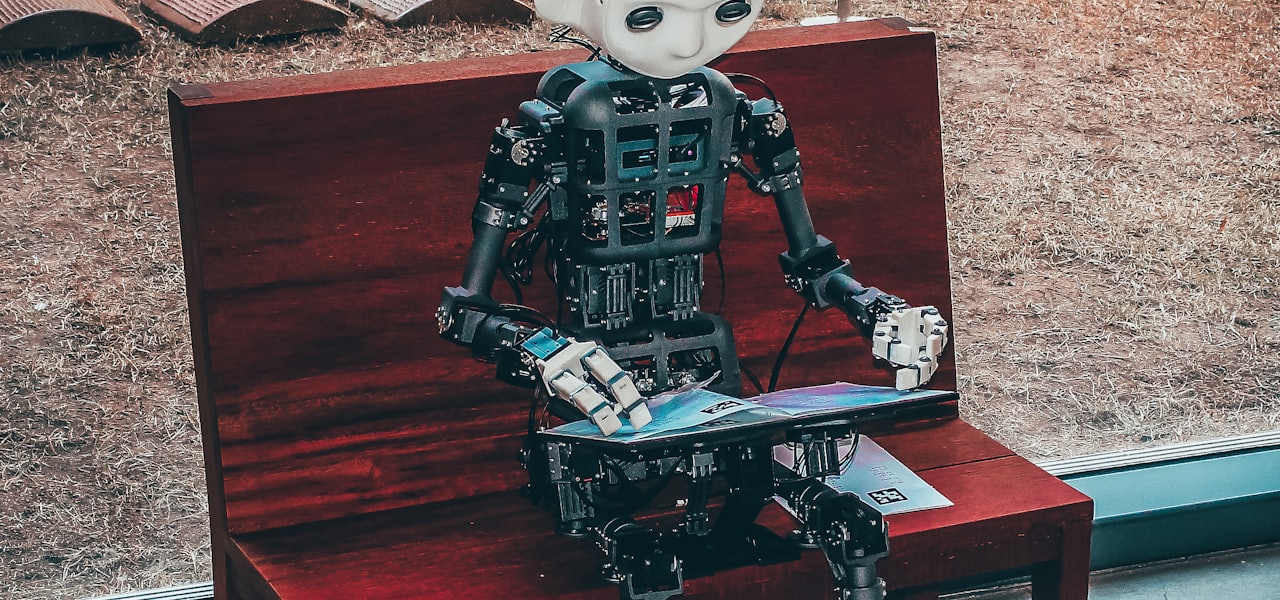
An automated restaurant or robotic restaurant is a restaurant that uses robots to do tasks such as delivering food and drink to the tables or cooking the food. Restaurant automation means the use of a restaurant management system to automate some or occasionally all of the major operations of a restaurant establishment. More recently, restaurants are opening that have completely or partially automated their services. These may include: taking orders, preparing food, serving, and billing. A few fully automated restaurants operate without any human intervention whatsoever. Robots are designed to help and sometimes replace human labour (such as waiters and chefs). The automation of restaurants may also allow for the option for greater customization of an order. == History == === Vending machines === In the late 19th and early 20th century a number of restaurants served food solely through vending machines. These restaurants were called automats or, in Japan, shokkenki. Customers ordered their food directly through the machines. === Sushi conveyors === Yoshiaki Shiraishi is a Japanese innovator who is known for the creation of conveyor belt sushi. He had the idea following difficulty staffing his small sushi restaurant and managing the restaurant on his own. He was inspired seeing beer bottles on a conveyor belt in an Asahi brewery. Yoshiaki's restaurants are an early example of restaurant automation; they used a conveyor belt to distribute dishes around the restaurant, eliminating the need for waiters. This example of automation dates back to the Japanese economic miracle; the first of Yoshiaki's conveyor belt sushi restaurants was opened under the name Mawaru Genroku Sushi in 1958, in Osaka. === Partial automation === As of 2011, across Europe, McDonald's had already begun implementing 7,000 touch screen kiosks that could handle cashiering duties. From 2015 to 2020, Zume had an automated pizza parlor. Later companies would try to produce smaller, less ambitious devices, with one robotics company producing a machine that could automate the slowest and most repetitive parts of assembling a pizza, such as spreading pizza sauce or placing slices of pepperoni, while leaving other customizations to employees. In 2020, a restaurant in the Netherlands began trialling the use of a robot to serve guests. In September 2021, Karakuri's 'Semblr' food service robot served personalised lunches for the 4,000 employees of grocery technology solutions provider ocado Group's head offices in Hatfield, UK. 2,700 different combinations of dishes were on offer. Customers could specify in grams what hot and cold items, proteins, sauces and fresh toppings they wanted. In 2021, Columbia University School of Engineering and Applied Science engineers developed a method of cooking 3D printed chicken with software-controlled robotic lasers. The “Digital Food” team exposed raw 3D printed chicken structures to both blue and infrared light. They then assessed the cooking depth, colour development, moisture retention and flavour differences of the laser-cooked 3D printed samples in comparison to stove-cooked meat. In June 2022 a California nonprofit chain of residential communities, Front Porch, experimented with robots in dining rooms at two locations to supplement wait staff by carrying plated food and drink to tables, and removing dishes. 65% of residents found the robots helpful, with 51% saying they let the staff spend more quality time with diners. 51% of staff were "excited" and 58% said they enabled more quality time with diners. The chain has 19 senior living communities (and 35 affordable housing communities), so it has potential to expand robots to more dining rooms. It is shifting to memory care, which may affect plans. == Rationales == === Advantages === Efficiency: Automated restaurants can significantly enhance operational efficiency by minimizing human error and reducing service time. With automated ordering, payment, and food preparation systems, customers can enjoy faster service and reduced waiting times. Cost savings: By reducing the need for human staff, automated restaurants can potentially lower labor costs. This can be particularly beneficial in areas with high labor expenses, as it allows for better resource allocation and cost management. Consistency: Automation ensures consistency in food quality and presentation. With precise portion control and standardized cooking methods, customers can expect the same quality and taste in their meals every time they visit. Enhanced customer experience: Self-service kiosks and automated systems provide customers with control and convenience. They can customize their orders, browse through menu options, and pay seamlessly, creating a more interactive and satisfying dining experience. === Disadvantages === Lack of personal touch: Automated restaurants may lack the personal interaction and warmth that traditional restaurants provide. Some customers prefer the human touch, personalized recommendations, and the social aspect of dining out. Technical issues: Reliance on technology means that technical glitches and malfunctions can occur, resulting in service disruptions or delays. Maintenance and technical support become critical in ensuring smooth operations. Limited menu complexity: The automation process may be better suited for standardized menu items rather than complex or customized dishes. The ability to cater to unique dietary preferences or accommodate special requests may be limited. Employment implications: Automated restaurants may result in job losses for traditional restaurant staff, potentially impacting the local workforce. It is important to consider the social and economic implications of adopting such technology. == Locations == Automated restaurants have been opening in many countries. Examples include: Nala Restaurant in Naperville, Illinois Fritz's Railroad Restaurant in Kansas City, Kansas Výtopna, a Railway Restaurant using model trains: franchise of various restaurants and coffeehouses in the Czech Republic Bagger's Restaurant in Nuremberg, Germany FuA-Men Restaurant, a ramen restaurant located in Nagoya, Japan Fōster Nutrition in Buenos Aires, Argentina Dalu Robot Restaurant in Jinan, China Haohai Robot Restaurant in Harbin, China Robot Kitchen Restaurant in Hong Kong Robo-Chef restaurant in Tehran, Iran, started in 2017, is the first robotic and "waiterless" restaurant of the Middle East. MIT graduates opened Spyce Kitchens in downtown Boston, Massachusetts, in 2018 Foodom, under Country Garden Holdings, opened January 12, 2020, in Guangzhou, China Robot Chacha, the first robot restaurant of India, is planning to open in the capital city of New Delhi. Kura Revolving Sushi Bar, with a number of locations in the United States, uses a tablets at tables for ordering, a conveyor belt to deliver food, and robots to deliver drinks and condiments. Chipotle Mexican Grill is beginning to deploy the Hyphen Makeline, which assembles up to 350 bowls and salads automatically per hour, and Chippy, an automatic tortilla chip fryer made by Miso Robotics. Serious Dumplings in Boca Raton, Florida
Global Language Monitor
The Global Language Monitor (GLM) is a company based in Austin, Texas, that analyzes trends in the English language. == History == Founded in Silicon Valley in 2003 by Paul J.J. Payack, the GLM describes its role as "a media analytics company that documents, analyzes and tracks cultural trends in language the world over, with a particular emphasis upon International and Global English". In April 2008, GLM moved its headquarters from San Diego to Austin. In July 2020, GLM announced that the word covid was its Top Word of 2020 for English. The company has been repeatedly criticized by linguists for promoting misinformation about language. Writing on Language Log, the linguist Ben Zimmer accused it of "hoodwink[ing] unsuspecting journalists on a range of pseudoscientific claims".
Pachinko allocation
In machine learning and natural language processing, the pachinko allocation model (PAM) is a topic model. Topic models are a suite of algorithms to uncover the hidden thematic structure of a collection of documents. The algorithm improves upon earlier topic models such as latent Dirichlet allocation (LDA) by modeling correlations between topics in addition to the word correlations which constitute topics. PAM provides more flexibility and greater expressive power than latent Dirichlet allocation. While first described and implemented in the context of natural language processing, the algorithm may have applications in other fields such as bioinformatics. The model is named for pachinko machines—a game popular in Japan, in which metal balls bounce down around a complex collection of pins until they land in various bins at the bottom. == History == Pachinko allocation was first described by Wei Li and Andrew McCallum in 2006. The idea was extended with hierarchical Pachinko allocation by Li, McCallum, and David Mimno in 2007. In 2007, McCallum and his colleagues proposed a nonparametric Bayesian prior for PAM based on a variant of the hierarchical Dirichlet process (HDP). The algorithm has been implemented in the MALLET software package published by McCallum's group at the University of Massachusetts Amherst. == Model == PAM connects words in V and topics in T with an arbitrary directed acyclic graph (DAG), where topic nodes occupy the interior levels and the leaves are words. The probability of generating a whole corpus is the product of the probabilities for every document: P ( D | α ) = ∏ d P ( d | α ) {\displaystyle P(\mathbf {D} |\alpha )=\prod _{d}P(d|\alpha )}
Yaron Singer
Yaron Singer is a computer scientist and entrepreneur whose work has focused on algorithms, machine learning, optimization, and artificial intelligence security. He was the Gordon McKay Professor of Computer Science and Applied Mathematics at Harvard University and co-founded Robust Intelligence, an artificial intelligence security company acquired by Cisco Systems in 2024. == Education == Singer received a PhD in computer science from the University of California, Berkeley under the supervision of Christos Papadimitriou. == Academic career == Singer was a postdoctoral research scientist at Google Research. Singer joined the computer science faculty at Harvard John A. Paulson School of Engineering and Applied Sciences in 2013 and became a full professor in 2019. == Research == Singer's research has focused on algorithms and machine learning, including optimization, algorithmic mechanism design, and adversarial machine learning. His doctoral work studied computational limits in algorithmic mechanism design, including truthful mechanisms and budget-feasible mechanisms. In optimization, Singer co-authored work on submodular optimization and parallel algorithms for large-scale data processing. Singer has also worked on adversarial machine learning, including attacks that use small perturbations or noise to affect the behavior of machine learning systems. == Entrepreneurship == In 2020, Singer co-founded Robust Intelligence Kojin Oshiba. Harvard SEAS reported that the company raised $14 million that year, and TechCrunch reported in 2021 that the company raised a $30 million Series B round led by Tiger Global. The company developed tools for testing AI models and detecting failures before or during deployment. TechCrunch described its RIME product as using an "AI firewall" to stress-test models. In 2024, Cisco Systems acquired Robust Intelligence. CTech reported that Cisco had not disclosed the purchase amount when the acquisition was announced, and later reported the deal value as $400 million. In 2025, Cisco launched Foundation AI, a Cisco team focused on AI for cybersecurity. Techzine reported that Singer led the team and was Cisco's VP of AI and Security. == Recognition == Singer has received a Sloan Research Fellowship, an NSF CAREER Award, a Google Faculty Research Award, and a Facebook Faculty Award. As a graduate student, he received Microsoft Research and Facebook fellowships. In 2012, he received the Best Student Paper Award at the ACM International Conference on Web Search and Data Mining for "How to Win Friends and Influence People, Truthfully: Influence Maximization Mechanisms for Social Networks."
Computer Dreams
Computer Dreams is a 1988 film created by Digital Vision Entertainment and released by MPI Home Video. Written, produced and directed by Geoffrey de Valois and hosted by Amanda Pays, it consists primarily of clips and behind-the-scenes work of early computer graphics animation. Notably included are Luxo Jr. and Red's Dream, the first two short films from Pixar. The film is an hour long and features an electronic score by Music Fantastic. It was revised and re-released on DVD as The History of Computer Animation, Volume 2. It won the Winner Gold Special Jury Award at the 1989 Houston International Film Festival, and the 1989 Golden Decade Award from the US Film & Video Festival. Music used includes: Gail Lennon - Desire, Gail Lennon - Like A Dream, Shandi Sinnamon - Making It,
Lingoes
Lingoes is a dictionary and machine translation app. Lingoes was created in China. Lingoes is often compared to its competitor Babylon because of similarities in their GUI, functionalities and most importantly being freeware. == Features and expandability == Dictionaries and encyclopedias can be installed on Lingoes in the form of new add-ons to extend its functionality. Add-ons for Wikipedia, Baidu Baike, Longman Dictionary of Contemporary English, Merriam-Webster's Collegiate Dictionary, WordNet, MacMillan English Dictionary, Collins English Dictionary and other cross-English dictionaries (e.g. Arabic, French or German) are available in Lingoes' official website. The program has the ability to pronounce words and install additional text-to-speech engines available for download also through Lingoes' website. Lingoes also offers a whole-text translation ability using online translation service providers like Google Translate, Yahoo! Babel Fish Translation, SYSTRAN, Cross-Language, Click2Translate, and others. Lingoes offers to translate a text via a mouse-over popup, or by double-clicking the selected text. Additional tools, termed as appendices in the program, include a currency converter, weights and measure units converter and international time zones converter. Additional ones, such as the periodic table of elements, a scientific calculator, Traditional Chinese and Simplified Chinese conversion utility or a Base64 encoding utility, can be added through the website.